
Domestically, Indians are exploring popular beach destinations, the hills of Himachal Pradesh and Uttarakhand, and the North-Eastern region as well.

Here's how leading brokerages and research houses expect 2023 to play out for the equity markets, and their sector preferences.

'Airports must look at their maximum capacity to handle passengers.'

The central government and the Reserve Bank of India have devised a country-specific plan towards implementation of overseas trade in rupee, people aware of the matter said. To start with, a small number of banks will be allowed to manage cross-border transactions in domestic currency with a particular country. "Small countries that are dollar-deficient have shown interest in doing trade in rupee.

The system of 'selecting' an election commissioner, which is before the Supreme Court, must be institutionalised.
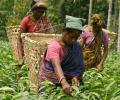
The department of commerce has urged the agriculture ministry as well as the diplomatic mission in Tehran to apprise it of details as to why Iranian buyers have stopped import of rice and tea from India, a senior government official said. Exporters said that exports of items such as high quality tea and rice have stopped since last week. As of now, there has been no confirmation from the authorities and the response from the embassy in Tehran is also taking time, they said.

'Yet the market didn't do all that badly because it was cushioned by domestic inflows.'

'If we are to be a contributor to the economy, we have to reduce carbon and imports.' 'We will achieve both -- that's our target.'

NRIs can repatriate the proceeds from the sale of a residential property in India, provided they meet a few conditions.

'New record for the Nifty50 is only a question of when.'

'Career paths are no longer linear as professionals look to build a more holistic career portfolio that is true to their professional and financial goals.'

The Reserve Bank of India (RBI) has allowed the opening of nine special vostro accounts with two Indian lenders - Uco and IndusInd Bank - to facilitate overseas trade in rupee, Commerce Secretary Sunil Barthwal said on Tuesday. Apart from the domestic lenders, Russia's two largest banks - Sberbank and VTB Bank - are the first foreign lenders to have received approval from the central bank for settling international trade transactions in rupee. "Nine accounts have been opened. One each in Uco Bank, Sberbank, and VTB and six with IndusInd Bank. There are six different Russian banks who have opened special vostro account in IndusInd," Barthwal said.

Any currency design change must be approved by the RBI central board and the central government.

Negotiations for a trade deal between India and the UK have run into fresh controversy, after the proposals under a leaked chapter of the deal on intellectual property (IP) are believed to put access to affordable, lifesaving generic medicines from India at risk. According to the draft IP chapter put out by an international trade portal bilaterals.org, the UK is seeking continuous extension of patent period and rights through small tweaks in the drug, known as evergreening. This may prevent patents from expiring, impacting cheaper drug availability and its production by Indian generic drug manufacturers.

The government is targeting export of goods and services worth $2 trillion by 2030.

The Centre is pushing for bilateral trade with Cuba and its settlement in rupee as a part of its strategy to internationalise the domestic currency. A delegation from Cuba, including officials from its central bank, met Indian government officials and banks last month to discuss bilateral trade and settlement using the Reserve Bank of India's (RBI's) payment mechanism in rupee, said people aware of the matter. Since the Cuban nation has opened up its economy and is looking to implement reforms to attract investments from India, Cuban banks have evinced interest in opening special rupee vostro accounts (SRVAs) with Indian banks.

India imported goods worth $4.23 billion in June from sanctions-hit Russia, up 6.8 times as compared to last year, as demand for shipments of crude oil grew at the fastest pace during the month. Crude oil worth $3.02 billion was imported in June, which translates into a share of 71 per cent of the total imports from Russia, commerce and industry ministry data showed. Similarly, during the April-June quarter, India's imports from Russia were valued at $9.27 billion, up 369 per cent on year.

Banks have raised concerns over the new international trade settlement in rupee, fearing that facilitation of such a mechanism could result in them facing the ire of economic sanctions by the West, people aware of the matter said. Large banks with overseas operations have sought clarity and assurance from the Reserve Bank of India (RBI) that they will not be targeted with sanctions for facilitating rupee trade with a sanction-hit country such as Russia. The present payment mechanism is a shift from earlier such arrangements, like the one with sanction-hit Iran, which involved banks facilitating settlement of international trade that did not have business in the sanctioned nation.
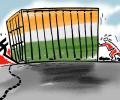
The government may roll out a new foreign trade policy (FTP) of a shorter term of two-three years in a bid to keep pace with the fast-evolving scenarios in international trade which have been triggered by recent disruptions, such as the pandemic and the Russia-Ukraine war. An FTP is an elaborate policy guideline and strategy to promote the export of goods and services, with a duration of five years usually. The existing policy came into force on April 1, 2015, and was valid for five years, before multiple extensions.

The Centre plans to repeal the existing 80-year old Coffee Act and has proposed a new "Coffee (Promotion and Development Bill), 2022" to promote development of the Indian coffee industry. Through a new law, the government aims to modernise the functioning of the Coffee Board of India that is responsible for boosting production and the quality of Indian coffee, push exports and support the development of the domestic market. The Bill is likely to be introduced in the ongoing session of the Parliament.
